Introduction: The Importance of Seal Integrity Testing for Pillow Pouches
Pillow pouch packaging is widely used across the food, beverage, pharmaceutical, and cosmetic industries due to its cost-effectiveness, convenience, and protective barrier properties. Despite these advantages, even minor seal defects can compromise product safety, allowing oxygen, moisture, or microorganisms to enter the package. Maintaining the integrity of pillow pouches is therefore crucial for ensuring product quality, shelf life, and consumer safety.
Seal integrity testing is a reliable method to identify potential leaks and evaluate the effectiveness of sealing processes. By detecting defects early, manufacturers can prevent product spoilage, minimize recalls, and maintain compliance with regulatory standards. For companies producing consumable goods, this testing is essential to ensure that every package delivers the intended protection to the consumer. Moreover, seal testing contributes to long-term cost savings by reducing waste and improving production efficiency.
Seal Integrity Testing for Pillow Pouches: ASTM F2096 Package Test Method
De ASTM F2096 standard outlines the procedure for seal integrity testing of pillow pouches. This method involves internal pressurization of the pouch while submerged in water to detect gross leaks. Air escaping from a compromised seal forms visible bubbles, which indicate the location of defects.
The sensitivity of the test is influenced by the applied differential pressure and the method of pressurization. Proper calibration and stabilization of pressure are critical to avoid over-pressurization, which may cause false positives or rupture seals. For porous materials, water saturation is allowed before evaluation to ensure accurate detection. By following this standardized procedure, the package integrity test method provides repeatable, reliable results across different pouch sizes, materials, and production batches.
Applications and Significance of Seal Integrity Testing
Performing seal integrity testing on pillow pouches is essential for several reasons:
- Consumer Safety: Prevents ingress of air, moisture, or contaminants that can spoil the product.
- Quality Assurance: Confirms that heat seals meet production standards and maintain integrity during transport and storage.
- Regulatory Compliance: Ensures adherence to ASTM F2096 and other international packaging standards.
- Material Assessment: Detects weak points, substrate holes, or sealing defects that may affect shelf life.
- Versatility: Effective for long or oversized pouches that cannot be tested using other methods.
- Process Optimization: Provides insight into sealing parameters, allowing manufacturers to refine production for consistent quality.
This method is niet-destructief, enabling testing without damaging the product, which is particularly valuable for high-value, sterile, or sensitive items. Regular use ensures that every production batch meets expected standards and protects the brand reputation.
Recommended Equipment: Cell Instruments GLT-01 Gross Leak Tester
To efficiently perform seal integrity testingde Cell Instruments GLT-01 Gross Leak Tester is highly recommended for pillow pouches. Key advantages include:
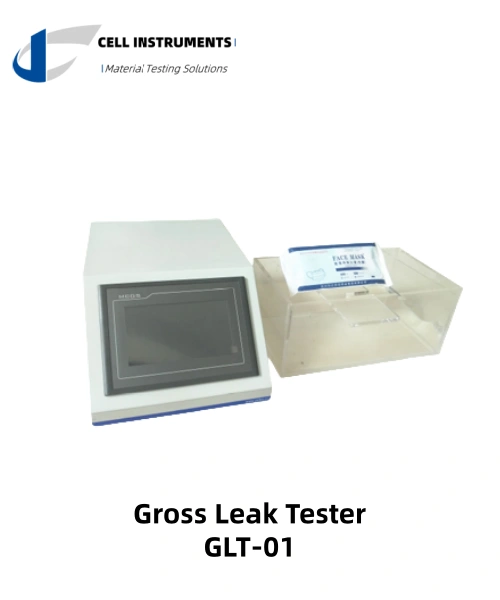
- Non-destructive testing that identifies gross leaks accurately.
- Automated pressure control for consistent and repeatable results.
- ASTM F2096 compliance, ensuring global standard adherence.
- Compatibility with both porous and non-porous materials.
- User-friendly interface, facilitating rapid testing in laboratory and production environments.
Using advanced equipment like the GLT-01 enables manufacturers to confidently verify package quality, reduce waste, and maintain consumer trust.
Conclusion: Ensuring Pillow Pouch Quality and Safety
Seal integrity is a fundamental aspect of pillow pouch packaging. Using ASTM F2096 seal integrity testing, manufacturers can identify and correct defects, ensuring pouches remain contamination-free and meet quality expectations. The combination of standardized testing and reliable equipment like the Cell Instruments GLT-01 Gross Leak Tester allows companies to maintain high production standards, optimize sealing processes, and provide consumers with safe, high-quality products. Regular seal integrity testing safeguards both the product and brand reputation, making it an indispensable component of modern packaging quality control.
Moreover, adopting a proactive testing strategy helps companies quickly respond to material changes, equipment maintenance issues, or process deviations, ensuring continuous protection for every package produced.
 NL
NL  EN
EN  AR
AR  BG
BG  CS
CS  DA
DA  DE
DE  EL
EL  ES
ES  ET
ET  FI
FI  FR
FR  HU
HU  ID
ID  IT
IT  JA
JA  KO
KO  LT
LT  LV
LV  NB
NB  PL
PL  PT
PT  RO
RO  RU
RU  SK
SK  SL
SL  SV
SV  TR
TR  UK
UK